
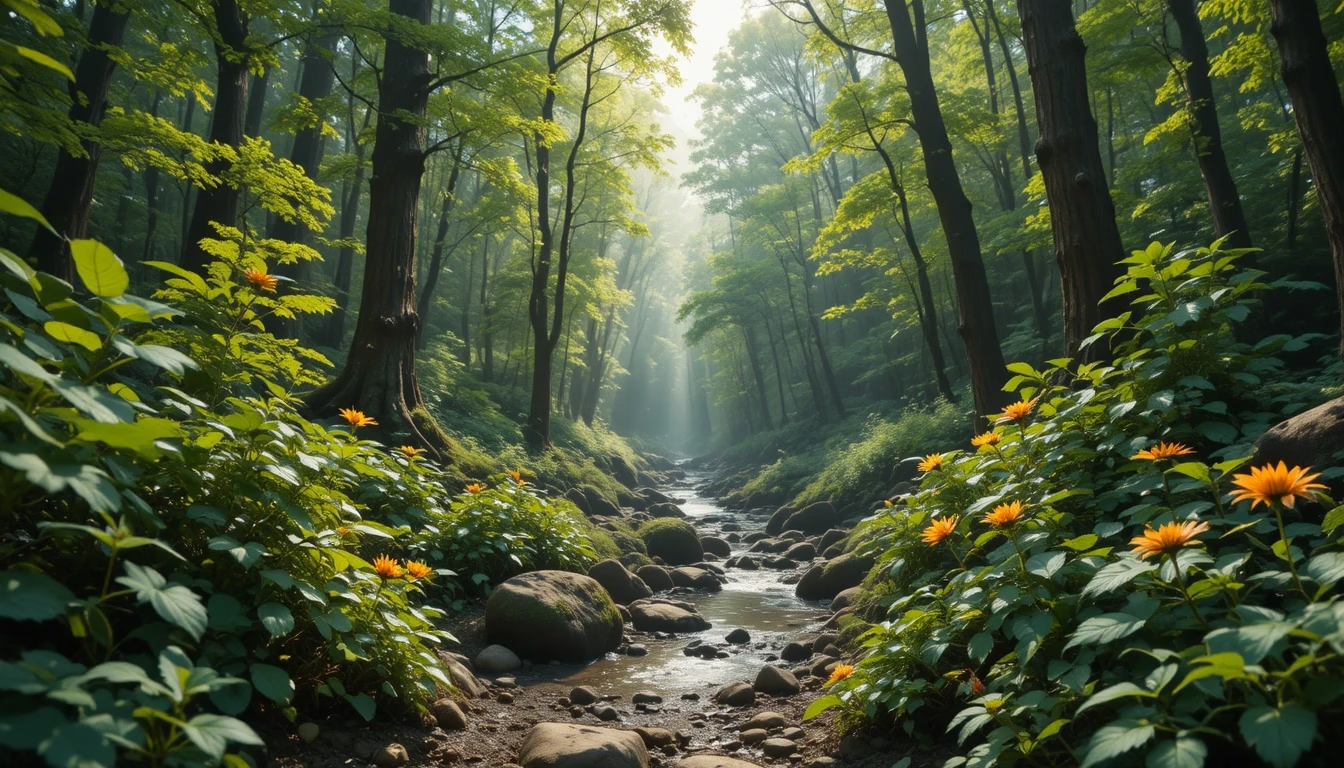
Prologue: The Contradiction That Shouldn’t Exist
In 2020, a camera trap in the French Pyrenees captured something extraordinary: a female brown bear teaching her two cubs to hunt. That same week, seismologists recorded a minor earthquake along the same mountain range—the latest in a series of tectonic shudders that began 100 million years ago and never truly stopped. The coexistence captures the Pyrenees’ central paradox: this remains one of Europe’s most geologically active mountain ranges, yet it has simultaneously become the continent’s greatest wildlife recovery story. How did a landscape forged by continental collision, volcanic activity, and relentless erosion become a sanctuary for species driven to extinction elsewhere? This is the story of mountains that should be biological dead zones but instead pulse with more life today than they have in 500 years.
Chapter 1: The Violence of Creation—A Mountain Range Born from Collision
The Car Crash That Built a Continent
The Pyrenees exist because Africa hasn’t stopped trying to invade Europe. About 100 million years ago, the Iberian microplate—a geological shard of Africa—crashed into the European plate at approximately the speed fingernails grow. The resulting crumple zone became the Pyrenees, and the collision continues today at about 1 millimeter per year.
The Evidence of Ongoing Violence:
- Earthquakes: 20-30 detectable tremors monthly
- Hot springs: 50+ thermal sources indicating active geothermal systems
- Uplift: Mountains still rising 0.5-1mm/year despite erosion
- Fault lines: The North Pyrenean Fault remains seismically active
The Geological Diversity That Became Ecological Opportunity
Unlike the relatively uniform Alps, the Pyrenees are geologically schizophrenic:
Western Pyrenees (Basque Country to central):
- Limestone karst: Creates cave systems, underground rivers
- Resulting ecology: Bat sanctuaries (22 species), specialized cave insects
Central Pyrenees (highest peaks):
- Granite cores: Resistant to erosion, form jagged peaks
- Resulting ecology: Alpine specialists, glacial relicts
Eastern Pyrenees (Mediterranean slopes):
- Slate and schist: Softer rocks, gentler slopes
- Resulting ecology: Mediterranean species, migration corridors
This geological diversity created micro-refuges—pockets where species could survive ice ages, climate shifts, and human pressure when they vanished elsewhere.
Chapter 2: The Human Abandonment That Made Rewilding Possible
The Great Emptiness
The Pyrenees’ wildlife recovery began with human tragedy. From 1850-1970, the mountains experienced one of Europe’s most dramatic rural abandonments:
- Population decline: 75% in many valleys
- Abandoned villages: 300+ completely deserted
- Agricultural land reclaimed: 60% of pastures reforested naturally
- Result: A de facto wilderness accidentally created
This created what ecologists call the “rewilding window”—a unique historical moment when human pressure decreased faster than wildlife could recolonize.
The Infrastructure That Didn’t Happen
While the Alps became crisscrossed with highways, ski resorts, and railways, the Pyrenees remained relatively undeveloped due to:
- Steeper slopes: More expensive to build on
- Less strategic value: Not central Europe’s north-south corridor
- Political border: France-Spain divide complicated development
- Result: Europe’s last continuous mountain wilderness
Chapter 3: The Keystone Returns—How Five Species Transformed an Ecosystem
1. The Brown Bear: The Unlikely Peacemaker
History: Hunted to extinction by 1990s (last native bear shot in 2004)
Reintroduction: Slovenian bears introduced starting 1996
Current population: 70+ individuals
Ecological impact:
- Seed dispersal: Bears carry berries up to 20km
- Soil turnover: Digging for roots aerates soil
- Carcass distribution: Provides food for 40+ scavenger species
- Unexpected benefit: Bears scare wild boar away from villages
The Social Revolution:
Initially controversial, bears have become economic assets:
- Bear tourism: 15M€ annual revenue in Béarn region
- Sheep predation solutions: Guardian dogs (Patou), electric fences (85% effective)
- Cultural shift: From “problem” to “heritage”
2. The Iberian Ibex: The Vertical Engineer
History: Reduced to 100 individuals in Ordesa by 1900
Recovery: Protected in 1918, naturally recolonized
Current population: 50,000+ across range
Ecological impact:
- Vertical seed dispersal: Carries seeds up/down cliffs
- Terrace creation: Grazing maintains alpine meadows
- Nutrient cycling: Moves nutrients from valleys to peaks
- Landscape architecture: Their paths become water channels during rains
3. The Bearded Vulture: The Bone Recycler
History: Extinct by 1910 (shot, poisoned)
Reintroduction: Started 1980s (Austrian birds)
Current population: 150 breeding pairs
Ecological impact:
- Calcium distribution: Bone consumption → calcium-rich excrement → strengthens other species’ bones
- Disease control: Removes carcasses in 30 minutes (vs. months to decompose)
- High-altitude nutrient transfer: Drops bones at nesting sites, fertilizing cliff ecosystems
4. The European Bison: The Forest Architect
History: Extinct in wild since 1927
Reintroduction: 2014 (Polish-French project)
Current population: 40+ in two herds
Ecological impact:
- Forest opening: Creates clearings (50% more light reaches forest floor)
- Biodiversity increase: Clearings support 300% more plant species
- Wallowing pools: Create temporary wetlands for amphibians
- Bark stripping: Creates habitats for insects, fungi
5. The Gray Wolf: The Regulator
History: Extinct by 1930s
Natural return: Italian wolves arrived 1990s
Current population: 30+ packs
Ecological impact:
- Ungulate population control: Reduces overgrazing
- Scavenger cascade: Leftover kills feed 23 species
- Riverbank recovery: Less deer → more vegetation → less erosion → better fish habitat
- Trophic cascade restored: First complete large predator guild in Western Europe since Middle Ages
Chapter 4: The Microbial Miracle—How Invisible Life Supports Visible Recovery
The Soil Revolution
Beneath the dramatic mammal returns, a microbial renaissance enabled everything:
Mycorrhizal Networks:
- Pre-rewilding: Degraded soils, low fungal diversity
- Current: 200+ species of mycorrhizal fungi identified
- Function: “Wood Wide Web” connecting trees, sharing nutrients
- Impact: 300% faster tree growth in reforested areas
Scat Microbiomes:
- Each returning species introduces unique gut bacteria
- These enrich soils (5-10x more microbial diversity near herbivore scat)
- Result: Healthier soils → more plants → more herbivores → more predators
The Water Cycle Resurrection
Before rewilding:
- Compacted soils from overgrazing
- Rapid runoff (floods after rain, drought after)
- Water retention: 30-40% of rainfall ran off immediately
After rewilding:
- Soil structure restored by roots, worms, insects
- Water retention: 70-80% of rainfall retained
- Result: Springs reactivated (150+ previously dry), rivers more consistent flow
Chapter 5: The Climate Change Buffer—How the Pyrenees Are Becoming Europe’s Refuge
The Altitude Gradient Advantage
While lowland Europe faces climate chaos, the Pyrenees offer temperature gradients unavailable elsewhere:
- Vertical migration: For every 1°C warming, species move 150m upward
- Available space: 100km horizontal = 3,404m vertical (from Mediterranean to alpine)
- Result: Species can migrate within the range rather than disappearing
The Data: Who’s Moving Up
Documented elevational shifts (1990-2020):
- Plants: 65% of species moved upward (average 29 meters/decade)
- Butterflies: 75% of species moved upward (average 45 meters/decade)
- Birds: 60% of species expanded upward
- Trees: Beech forest line rose 80 meters since 1950
The Creation of New Ecosystems
Climate change + rewilding = novel ecosystems never seen before:
Example: The “Sub-Mediterranean Alpine”
- Location: 1,800-2,200m on south slopes
- Species mix: Alpine plants + Mediterranean shrubs
- New arrivals: 15+ insect species not previously recorded in mountains
- Supporting: Lynx, chamois, newly arrived bird species
Chapter 6: The Human Dimension—How People Became Part of the Ecosystem Again
From Exploitation to Participation
The Pyrenees model shows rewilding doesn’t require human exclusion but role transformation:
Traditional shepherds → Biodiversity guardians:
- Payment for ecosystem services: EU funds for maintaining pastures (prevents forest encroachment)
- Multi-species herding: Sheep + guard donkeys + herding dogs (reduces predation)
- Transhumance 2.0: Seasonal moves that maintain habitat diversity
Hunters → Population managers:
- Quotas based on science: Not tradition
- Selective culling: Removing sick, old individuals
- Revenue for conservation: Hunting fees fund protection
Tourists → Citizen scientists:
- App-based reporting: 50,000+ visitors/year submit wildlife sightings
- Camera trap sponsorships: Tourists “adopt” traps, get photos
- Economic impact: Wildlife tourism now exceeds farming in many valleys
The Economic Renaissance
Before rewilding (1970s):
- Dying villages, aging populations
- Economy: Marginal farming, some logging
- Young people leaving: 80% under 30 emigrated
After rewilding (2020s):
- Population stabilization (some valleys growing)
- Economy diversified: Tourism (40%), conservation jobs (15%), sustainable farming (25%), remote work (20%)
- Young people returning: 60% of new businesses started by returnees
Chapter 7: The Continental Scale Impact—How Pyrenees Rewilding Is Changing Europe
The Green Corridor Project
The Pyrenees aren’t an island but a bridge:
European Green Belt:
- Vision: Connect Pyrenees to Alps to Carpathians
- Current status: 1,200km of wildlife corridors established
- Flagship species: Brown bears now moving between ranges after 150 years
Atlantic-Mediterranean Flyway:
- Importance: 5 million birds/year use Pyrenees passes
- Rewilding impact: More stopover habitat, fewer hazards
- Documented effect: 30% increase in migratory bird populations using corridor
The Policy Revolution
Pyrenees success has inspired:
EU Rewilding Policy (2025):
- 30% of EU land under rewilding management by 2030
- Based on: Pyrenees model of minimal intervention
- Funding: 100B€ from Common Agricultural Policy redirected
Transboundary Park Model:
- Pyrenees National Park (France) + Ordesa (Spain) = joint management
- Result: First transboundary predator management in EU
- Replicated: Now in Alps, Carpathians, Balkans
Chapter 8: The Future Frontiers—What’s Next for Europe’s Wildest Mountains
The Species Waiting in the Wings
Potential reintroductions:
- Eurasian lynx (feasibility study complete, 2025 pilot)
- Wild horse (Tarpans, already in trial)
- Moose (Swedish population could adapt)
- Imperial eagle (successful in Alps, likely next here)
The Climate Resilience Laboratory
Pyrenees 2100 Project:
- Goal: Model climate impacts at 100m resolution
- Finding: Pyrenees will maintain 85% of current species (vs. 40% in Alps)
- Reason: Greater microclimate diversity
The Ultimate Goal: Complete Pleistocene Rewilding?
Controversial vision: Return missing megafauna:
- Elephants (Asian forest elephants as woolly mammoth proxies)
- Lions (Asiatic lions as cave lion proxies)
- Hyenas (spotted hyenas lived here 10,000 years ago)
Scientific basis: These species shaped ecosystems until recently
Practical reality: Social acceptance likely decades away
Epilogue: The Lessons from a Violent Sanctuary
The Pyrenees teach us that wildlife doesn’t need pristine environments—it needs opportunity. A landscape still shuddering with earthquakes, still being shaped by erosion, still geologically “violent” has become Europe’s greatest wildlife sanctuary precisely because:
- Disturbance creates diversity (geological and biological)
- Human abandonment can be ecological opportunity
- Keystone species engineer recovery faster than we imagined
- Economic and ecological interests can align
- Mountains aren’t barriers but bridges—for wildlife and ideas
As climate change accelerates, the Pyrenees stand as a testament to nature’s resilience. The mountains that formed from continental collision are now colliding European conservation paradigms, creating something new in the impact zone: hope, tangible and growing, clawing its way up steep slopes, crossing borders, and showing that even in a human-dominated world, wildness can return—especially where we least expect it.
The Pyrenees’ paradox is ultimately this: sometimes, the ground must shake for life to find its footing. Sometimes, violence creates sanctuary. And sometimes, Europe’s future depends on remembering how to be wild.
